The Watch Thief – Chapter 27

Apartment of Elsa von Nagelein, Berlin.
28 April, 1920.

Elsa von Nagelein was dressed in navy shirt and drab fawn dress; streaked mascara and glumness. Her apartment was books and ordered files, the little she’d brought from The Hague to Berlin. She swept back her long wispy hair and told her angry story.
“They shouted at us… not so much Trebitsch, but the soldiers. Then Ehrhardt’s men on the way back to Doberitz… god, all those people… We heard the machine guns and the screams. I remember Trebitsch checking his passport for the third time, as if looking for a reason to smile.”

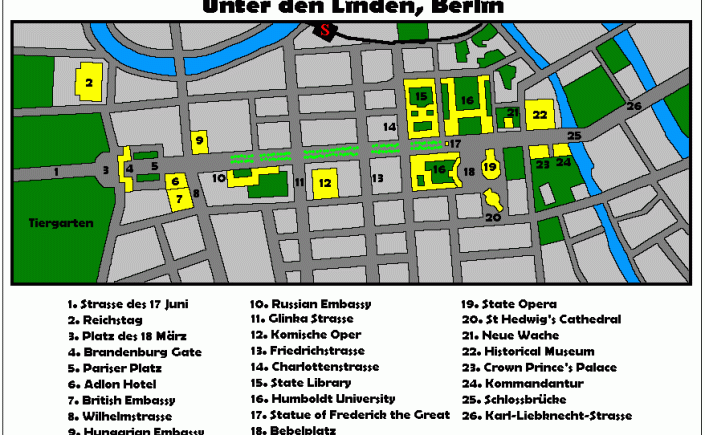
Unter den Linden, Berlin.
Saturday 27 March, 1920.

Trebitsch, buttoned up in black jacket threw one arm round Elsa and another to the world, as if all was right with it. She was in the arms of joy, her mood bubbly, splashing back hazel hair, long beige coat flapping as they walked. He twirled his cane proudly, having just explained to Haider the political geography of Berlin.
“And Elsa?” he asked. “She was around for most of it. You may ask me anything in front of her. I trust her completely.”
Elsa looked inside him and swam.
“Now,” he continued, “you may tell your friends at the New York Times, Trebitsch Lincoln remains in Berlin to wind up the business of the plotters: and to ensure their escape!!”
They turned right onto Wilhelmstrasse. The journalist, Haider, took a sudden panic. His hand remained on Trebitsch’s arm.
“Mr. Haider, I can lead you to a few good bars. I’m sure you would like a scotch,” said Trebitsch.
“It’s not that, Herr Lincoln. Should we be going this way?”
“It is true that an indictment has been drawn up against me: ‘Illegal Assumption of Authority and Unlawful Requisitioning of State Property!’ Appar-ently!!”
Elsa, hand-in-his, announced, “Herr Lincoln knows no fear!”
Trebitsch stopped them on the corner and raised his cane across the road to a building of box window: red, yellow and blue flying from the verandas.
“There is the Hungarian embassy. I have my country of birth on my side. And good friends. Wilhelm Ludwig for one!!”
“I’m not acquainted with Mr. Ludwig,” said Haider.
Trebitsch took out his Hungarian passport. “Wilhelm Ludwig!! You see? Haha! Come, sir!”
Elsa tittered and Haider took a friendly slap on the back and followed Trebitsch.
“But Ebert has returned? How did you even get that?”
Elsa and Trebitsch were full of a giddy glow.
“The locals think I am still a British subject!!”
“They’re not going to do anything against him,” she tittered.
“The Putsch’s failure is not complete,” he told Haider. “A good seed has been sewn here.”
And then, they were at the British embassy gates and Trebitsch raised his arms facing it.
“We shall come again!!” he roared.

Elsa von Nagelein took a cigarette from the carton and Weiss lit a match. She took a drag and put her slim hand around the wine glass.
“He was living with me around the time of his birthday. His forty-first.” The cigarette shook in her fingers. Her lips searched around for a smile and glistened. We went to the wax-works and saw the Wilhelm Vogt sculpture.”
She took another draw. “You know, the crook who pretended to be an officer and robbed a bank? Well, Trebitsch almost tripped over the wachs-figur!”Elsa laughed out loud.
“He went terribly pale. It was too close to home. I mean, Vogt conning those soldiers: that’s Trebitsch and Bauer’s relationship!”

British Foreign Office, London.
Mid-April, 1920.

Lord William Tyrrell rapped and opened a familiar door to a familiar office. Eyre Crowe, though fifty-six, sprung to his feet and shook Tyrrell’s hand. Crowe was tall with arch hair, magnet eyebrows and poultry lips.
“Lord Tyrrell, William: I’m glad you didn’t send a courier. It is good to see you. How are things at Political Intelligence?”
He had to ask. Tyrrell was not physically dissimilar to how Crowe remembered: big shoulders; big moustache; hair combed right; grey and white strands at the ears. Yet since his breakdown, Tyrrell looked far away, like he’d erected a screen around himself, observing remotely.
“Things are better, thank you, Eyre.”
Tyrrell took a seat in front of his old desk. “We have a strong team. How is work under Lord Curzon?”
“He shares my doubts over the P.M., but with Curzon everything is a ceremony,”
“I heard about Leipzig,” said Tyrrell. “I know you were born there and I wanted to say how sorry I am. What was it, a hundred and thirty dead?”
Crowe looked down to the ruby uniform pattern carpet. Tyrrell reached over: his hand doubled in the desk’s reflection. Every piece of wood in the Ministry shone, from door to dada rail to table incline. Tyrrell finger brushed the felt inset and looked up, into Crowe’s dark eyes.
“They arrested Kapp in Sweden last night.” He took a deep breath. “Ludendorff and Bauer have been seen around the Austrian border and my sources tell me that bastard, Trebitsch Lincoln, was with them in Munich. He’s since gone back to Berlin; trying to hawk Bauer’s writings.”
“Has the pressure we put on law enforcement borne fruit?” asked Crowe.
“They want him in chains, and seem determined about it,” said Tyrrell.
“It can’t have escaped your notice, Mr. Tyrrell, that he continues to talk to every press man he finds. General Malcolm heard from one of them that he and Bauer are organising a new putsch. He even dragged Churchill’s name into it, saying this putsch had his support. Please find out what you can.”

Elsa glugged back half a glass of wine and held it out for a top up. It never came.
“Fine, Weiss. Fine.” She withdrew the glass.
“He got a manuscript from Bauer: the colonel’s memories of the Kapp Putsch. Well, Trebitsch took me with him when he was trying to sell it to reporters.”
Weiss’s oval face and round lenses were buried in the notebook, scribbling detail enough that Elsa could reach across and grab the bottle of Sauvignon back. He looked at her, hurt.
“I guess he thought I’d add some style to his pitch. There was the Times, Chicago Tribune. Trebitsch wanted $2,500, but they all turned him down. One time, I accidentally left the papers at a restaurant. We got them back, more’s the pity.”
“All his letters were here?” asked Weiss, as she drank.
Elsa slapped down her glass and took out her cigarette case. “Yes. From Kapp and Ludendorff. Along with his books, his watch and that stupid cartoon he shows everyone. He went to Bavaria for a while to meet Bauer and Ehrhardt… shaved off his moustache and glasses for fear he’d be recognised. So much for the fearless one.”

Cafe Stefanskirchen, Bavaria.
Mid April, 1920.

“Oh delicious irony. Ebert passed through here as he fled. Now the new government-in-exile rest comfortably under the protection of Bavaria’s new Prime Minister and Chief of Police!! The fruits of our labour, gentlemen, the fruits of our labour!!”
Six tables lined the cafe front, sun catching partitions of ambient coloured glass. The staff respected patron privacy but intuitively knew when to be chatty. Free bonuses awaited valued customers. Customers such as Max, and the various guests that stayed with him. That day a number of them were visiting Max at once: Hermann Ehrhardt, Franz Stephani, Erich Ludendorff, and Ignacz. They had each made their own way across the country.
“It is just the beginning,” said Bauer.
“We should explore relationships with the Russians, everyone kicked out by Lenin,” said Ehrhardt.
“Yes,” said Bauer, gripping his teacup near to smashing. “The Anglo-French criminals are as good as in league with the Red Internationals and it is they that we shall over-throw.”
Trebitsch raised a finger in the air. “We’ll be White Internationals!”
“Regent Admiral Horthy would be a fine ally,” said Ludendorff. “There are interesting developments afoot in your birthplace, Trebitsch. I think you and Colonel Bauer should bring Horthy into it.”
Trebitsch nodded enthusiastically. “Ideal! On my last visit I met a fellow named Eckhardt in Horthy’s press office.”
“Well lets try and keep this out of the press,” said Stephani.
“I only meant that we know many in advantageous positions who will be of use to us.”
Trebitsch noticed the loon at the other table, staring at them, and Stephani did as well. He was sat alone, with sunglasses on, a long ginger beard and a stupid smile. Too stupid to be trouble, thought Trebitsch, and he continued his tirade. “We share the same aims as the Italians, the Austrians; Hungarians and White Russians: a glorious end to the Entente awaits us!!”
“Well, for God’s sake keep your voice down,” said Stephani.
“Franz, mind your tone,” Bauer warned. “We are safe here.”
Ehrhardt leaned over and whispered. “Franz has seven counts of murder against him, so you see my friend values discretion.”
Trebitsch faced Stephani and said, “Major, the apology is mine to make. Here.” He put his hand in his pocket and handed his passport over to Stephani. “Perhaps you should get one of these.”
Stephani read the name aloud. “Heinrich Lamprecht.”
Trebitsch said, “It came care of our Bavarian friend, Chief Pohner.”
Bauer rocked back on his chair. “And mine says Dr. Becker!”
The men laughed: except for Ludendorff. “Alright. Alright. Captain Ehrhardt, call on Pohner and get Stephani his I.D. Then ask him to set up a meeting with Minister-President von Kahr.”
Stephani whispered, “I really don’t like the way that ginger is looking at me.”
The loon was still watching them, mouth freakishly shaped in frozen cackle. He wore slacks, braces and beard over his shirt. Occasionally his head would nod, and he took none of Stephani’s visual cues to get lost.
“I have business in Berlin next week,” said Trebitsch. “Max, how about we leave for Budapest in early May?”
“That suits me,” said Bauer.
Stephani put his hand over his eyes. “He’s coming over.”
They all looked at the loon. Ehrhardt went cold, but did not flinch. He kept his hands at his sides. Trebitsch, who had a cup in his hand, also did not move. The loon had little body mass: he was a stick figure, almost Chaplinesque, but his shadow fell large over General Ludendorff. He leaned in, his eyes hid beneath the sunglasses, still flashing that unsettling smile.
“What do you want, old man?” Ludendorff said.
“Away!” Bauer said.
The loon didn’t seem self-aware, rocking from side to side, and his breath was imposing.
“Is he drunk?” Stephani said.
“Hold on a moment…” Trebitsch said. “Pabst…”
“Hello there,” giggled the loon. “Would you like to buy some plots?”
Stephani stood up and tore the ginger wig off him. Bauer and Ludendorff laughed.
“Ingenious,” said Trebitsch.
Ehrhardt wagged a stern finger. “I almost shot you!” he said, as a smile wriggled from his teeth.

Apartment of Elsa von Nagelein, Berlin.
28 April, 1920

“He was in town to see Stinnes,” said Elsa. “The industrialist. Stinnes told him he wanted nothing more to do with Trebitsch, or Bauer or their putsches. He accused them of creating a fiasco. Trebitsch came home and threw a tantrum: ‘Stinnes doesn’t know anything’, ‘Stinnes shall rue the day when he betrayed us.’ All that nonsense.”
Elsa laughed.
She took a draw then stubbed the cigarette bent in the ashtray. “Before he left, he was talking about travelling abroad with Bauer. I don’t know where.”
The cigarette end smoked: Deputy Weiss. lifted it out and ceased it. “Well, Fraulein von Nagelein. All this is a tremendous help. Where do you think he might be now?”
Quick as a flash she answered. “Potsdam! Shacked up with that bitch of a secretary. He’s a fat liar, a lying bastard!”
“Potsdam, you say?” asked Weiss.
Elsa smiled wickedly. “I have her address. Let me get it for you.”

Near Potsdam Station, Berlin.
3 May, 1920.

Margaret Lenkiet was rooted to the open door of her apartment, showing Deputy Weiss the way out. Weiss had no intention of leaving. Behind them Officers Flax and Teal looked through boxes, and examined artefacts and arrangements. Officer Weir set a fob watch on top of the pile of books and lifted a folder of newspaper clippings.
“Where is he, Mrs. Lenkiet?” asked Weiss.
Lenkiet folded her arms and looked out to the street through spectacles and her straight black fringe.
“If he’s on the premises…” said Weiss
“He’s not,” she said.
Weir arrived at Weiss’s side. He had a tidy collection of papers. “Sir. I’ve got Lincoln’s plans for a newspaper; correspondence from Bauer and Ludendorff, before and after the putsch. This one’s dated today… a letter for Ludendorff that’s not been sent.”
Weiss smiled, and looked again at Frau Lenkiet.

Trebitsch watched the last of the light die as he waited at Potsdam Station. Another train would be along soon. He wore a padded brown overcoat to keep the chill out, and a fedora.
“Trebitsch Lincoln.”
He felt a hand on his back and the hand remained. He turned. Weiss, with swept back hair stared at him, street-lamps twinkling twice on his oval face.
“You’ve made a mistake. My name is Ploheimer,” said Trebitsch.
Weiss brought out a newspaper clipping about the putsch. The page bore Trebitsch’s photo.
“What do you want of me?”
“To arrest you of course. Come on.”
Trebitsch exhaled a hard sigh of defeat. “All right then. But you’ll let me fetch a couple of things from my rooms?”
“If you’re quick,” the deputy told him.
Weiss walked Trebitsch three minutes to Doblingerstrasse keeping him within grabbing distance at all times

Ten minutes later, Weiss was by running water taps in Trebitsch’s bathroom, looking out to a wide open window.

#

c. Andy Luke.
The Watch Thief runs one chapter a week. You can find more here.
To read advance chapters, PDFs, and access a big bundle of awesome extras come spend a few bob on Patreon.

Writer’s Commentary – The Watch Thief Prologue / Chapter 1

Research and illness took their toll on schedules for The Watch Thief – the novelization of the remarkable life of Trebitsch Lincoln: adventurer, crook, spy, journalist, rector and the events and cities he lived in. You can read it here at https://andy-luke.com/watch-thief/

For a change I’m delivering two commentaries previously only available to Patreon $2-a-month subscribers.  Refresh yourself with the Prologue and Chapter One or dive straight in!

Hello, patrons. Thanks for reading the first shots in a story that’s sustained my interest for years, and my first regular wage in as long. The prologue begins with Ignacz’s father scrubbing up for church. I wanted to begin with physical contact. It’s a far way from the shaving scene beginning Joyce’s Ulysees (with that amazing image of crossed razors on top a mirror), but I think it works. Nathan and his family are Jewish Orthodox, I wanted to make that a special point, name the clothing exactly, so I found info on attire at UnitedWithIsrael.org and Mazorguide.com.

The Comedy Theatre of Budapest, aka The Vigszinhaz, was the big draw in expanding Budapest, but unfortunately it wasn’t built until 1897, the time of Chapter 1. So Ignacz was on his way to the Municipal Theatre. I wasn’t able to get an exact location but I was sure Paks, were Nathan’s family lived, was a journey that meant he’d cross one of the bridges over the Danube. The Municipal was old already, and small, though it was moneyed and elegant.

Austria-Hungary’s merger and dual monarchy was created in 1867. Budapest, rapidly expanding in the 1890s, was a finance and import capital. Magyar is the name Hungarians give themselves and the 1890s saw the nobility move there and bring more finance into the developments.

The prologue takes place on March 16th, according to Jens Malte Fischer, who recounts events at the performance of Lohengrin, in his book Gustav Mahler, by Yale University Press. I’m not sure if I got away with the Count Zichy reference, and to cast some exposition… Géza Zichy was the city commissioner with some suction in Arts and Culture but he was also part of the right-wing anti-foreigner attitude in government at the time. Mahler had been teaching, and serving as the principal conductor under a ten year contract since 1888, six years. He’d already been in line of sight from Budapest’s cultural conflict in the press a few times. When Zichy’s new role as Intendant was announced, Mahler understood many of his rights were curtailed and powers transferred. The cards were on the table. Mahler signed a new contract with the Hamburg Opera on the q.t. and knowing Zichy wanted him out, he approached him and a severance was offered. Mahler announced his resignation, but to the public it might have looked like Zichy shoved him, which would have happened eventually. I’ve no evidence to suggest Ignacz was there on the night of the Lohengrin riot, or attended Mahler’s classes, but he did try to fake his Drama School papers and sneaking into a theatre seems in his character.

Chapter 1

Nathan moved his family closer to the city. This occurs shortly after the prologue. He moved from “a solid barge transportation business to…high finance” (Wasserstein), and essentially playing the stock market, and lost it all. This is where we pick up, with Ignacz at Drama School, and all is not well.

Budapest Metro Line 1, still running, is the third oldest underground railway in the world, built 1894-1896. The other two were Tunel in Istanbul and City & South in London. Ignacz’s route along Andrassy Avenue has him in the direction of Hősök tere (Heroes’ Square), where there’s a monument to the men of the Hungarian Revolution of 1848. His brothers, Lajos and Sandor, share their names with the two front-men, still well thought of, so it seemed safe to assume they were named in their honour.

When writing the graphic novel script for this, it took six years to settle on a good idea for the opening page. It began with a first panel family row, and six panels devoted to Ignacz’s starry-eyed hallucination during the mugging. There’s no record to Ignacz suffering hallucinations here or any eye condition. It just fit with the new metro lights, and the star vision I had in mind. I’ve hallucinated or seen silver ball floaters attributed to Ignacz, since, oh, my teenage years. Often after I’m beset by a coughing or sneezing fit, but at times with no corresponding origin point. My earliest memory that fits how they look is from a Primary School teacher who had a box of Mercury in her room and delighted us moving about the shimmering globules. Mercury is highly dangerous and toxic. Rather than live in dread of seeing my floaters I’ve long ascribed a good luck status to these, despite being not generally superstitious.

It was important I get right the culture of theatre and opera surrounding Ignacz at that time and I selected five operas performed in 1890s Budapest and read the liberetto scripts. These were Siegfried and (as noted) Das Rheingold, Eugene Onegin; Don Giovanni, Lohengrin and Tannhauser. I used a cut-up style with about ten lines from each then paired that down to a manageable size. The arrangement was more conscious than random. Das Rheingold’s tale of greed, lust and narcissism is a good thematic fit. Lohengrin is a classic heroes tale about nobility. I should mention Ignacz’s mother, Julie, was from nobility, though it didn’t seem to do her favours when business went bad. The story of Tannhauser fit with Ignacz’s art ambitions and want to travel. Don Giovanni mixes “comedy, tragedy and drama with the supernatural”, which covers all my basis and Giovanni and Ignacz have many similarities. It was uppermost in my mind.

Lohengrin is a heroes tale of political conflict, a story closer here to Mahler than Ignacz, though maybe not in Ignacz’s mind. I was offered the chance to watch Lohengrin with a rowdy group a few weeks ago, but sadly slept in. (We have a monthly Opera Club where we watch streaming content on a large screen, mainly from the excellent Opera Platform ) Eugene Onegin, the only opera from these I’ve seen performed, has little in relevance in story to Ignacz’s tale. It’s also the least interesting tale. Stick with Don Giovanni, or Das Rheingold. I have a list of which lines came from which operas but do you really want to know?

Oh, and we also get quotes from Clerks 2 and Forrest Gump, and I was aiming to place Quantum Leap’s ‘Oh Boy!”

A Note On Wasserstein

My research for Ignacz comes from many sources. Easily the most invaluable of these is Bernard Wasserstein’s The Secret Lives of Trebitsch Lincoln, from Penguin. Wasserstein’s version is a notably excellent piece of historical autobiography, drawing on solid research and it’s a riveting read. With this, which will rightfully be called an adaptation by some, I’ll be leaving out notable details, inventing others…Wasserstein delivers context but I aim to push this further, colour it in, include unsubstantiated reports Wasserstein firmly refutes.

I’ve amassed a large image archive and I’ll be reproducing some, though it looks like Patreon requires me to make separate posts.

Over on Patreon, Chapter 24 is nearly ready: the half-way point! You can read every chapter and commentary for The Watch Thief for just $2 U.S. for 30 days through Paypal, bank account, debit or credit card.

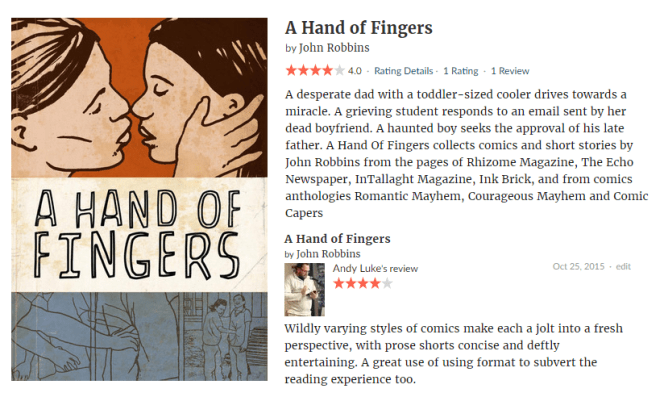
That’ll also get you e-comics, ‘We Shall Not Be Stapled’ by myself and ‘A Hand of Fingers’ by John Robbins. If there’s a rush on, or you sign up for $5 I’ll also unlock the artblog, the photo grids, process videos, poetry and short stories.

Weekly Facebook Vlog

For the last few weeks I’ve been experimenting with livestreaming on Facebook to some moderate success. The idea is to run personal updates on stuff in my life: telly, books, nights out and what-not as well as a little Watch Thief update in 15 minute (going on 18 minute) slots.

The most popular time seems to be midweek 9pm-11pm. Interact with the live-stream if there’s the opportunity. I’ll be tidying my lounge up for all-a-yous-ones at https://www.facebook.com/spider.confuser

Reading Week

I got three primary sources for WATCH THIEF including a trip underneath Trinity College Dublin to the Early Printed Texts department, through cavern and flaming torch to a 1931 manuscript. They could have let me see the 1971 reprint, but no, red carpet for moi. No photos of course, but an experience I hope to repeat.

Chapter 10 next week, or now on Patreon. Here’s a thing I made for it.

A lot of events going on behind the scenes at Castle Luke, the closest being an open mic night for writers at the Wee Art Pub where I’m resident. If you’re in Belfast and can get out to the Ravenhill Road on Wednesday 16th come and see what the folks at The Continental have put together.  There’s a FB event page here.

Bye for now!

Live interview incoming

I’m being interviewed by Captain Ashley Sanders for the Who’s This? podcast in a few hours. You can tune in live and compliment Ashley on her skill handling me, have an eased ole time, and ask a few questions if you like. We’re up around 8:30pm GMT, 3:30pm ET at https://www.facebook.com/CaptainAshleysHappyPlace

I aim to be talking Watch Thief, but Absence, Axel America and conspiracy theories have also come up. So who knows? Ashley seems like a vibrant person so fingers crossed for me.

20 Years of Making Comics!

Holy Shitzam, around fifty, more than I’d estimated. Twenty years since I got my first review from Comics International and Pete Ashton’s TRS review sheet. Rose Reynolds, my consultant, drew the first comics cover, with brother Stuart on the second. A few years later I was writing with Pete on Bugpowder, one of the UK’s first sites covering underground comics. By then I was making comics with people I wish I’d seen more of this last decade: Dek Baker, David Morris, Emmett Taylor and Gary Parkin etc. TRS and Bugpowder also put me in touch with John Robbins, thought-provoking flash-fic author and life-long friend. At the same time the Belfast Comics pub meets introduced me to Richard Barr, my sometimes one-man support network, whom I continue to collaborate with to this day. As well, I got to meet Patrick Brown, creator of ‘A Virtual Circle’. AVC was an astounding prophetic story of violence by internet. Paddy’s ‘Just do it’ process inspired my first efforts. Ten years later we were both making comics and literal neighbours, running The Black Panel small press distributor.

Around for the long vital loving in my comics making: Ralph Kidson, Sean Duffield, all of the Caption event people, Joe at FPI and John Freeman, my editors at Altern8, Glenys Williams, David Logicaine, Garr Shanley, Suzanna Raymond who goes above and beyond. The departed ones: Debs ‘Badass’ Boyask, a bright beacon of love and community in my life; John ‘Jackfirecat’ Grandidge, one of my biggest supporters who always made me feel clever and honoured. More recently, Helen Gomez, Miriam Turley, Peter Duncan, Laurence McKenna and Sector 13, Aaron Flanagan of ComicBookGuys, people who never let me feel like I’m not working in a vacuum.

John Robbins, gentleman artiste, has donated a free copy of ‘A Hand of Fingers‘ in PDF to the Ignacz readers on Patreon as part of this year’s Small Press Day celebrations.

And Aaron Flanagan of Comic Book Guys is hosting Belfast’s first ever Small Press Day this Saturday:

The store is located at 130 Great Victoria Street, between the garage and Shaftesbury Square. There’s likely to be a few surprise guests but here’s a who’s who to those announced:

Colin Langan – Artist on ‘A Life in Defence’, a medieval fantasy on life, death and leadership.
Dave Louden – Writer who draws ‘Detective Roscoe’ and publisher of Belfast City Comics.
Yours Truly, Andy Luke  – Another writer who draws, most recently on the collection, We Shall Not Be Stapled.
Roddy McCance – Writer/Publisher of Tales of the Fractured Mind, an important anthology of stories about mental health.
Glenn Matchett – Anthology mixer and writer of one-shot mystery/crime noir, Sparks!
Peter Duncan – Editor on Sector 13 and Splank! Annual, and the comics blog of the same name.

Right, who’s going to the pub?

New British Fun Comics / Artist Call-Out

Splank! Annual 2018 is the brainchild of patron of these arts and dear friend, Peter Duncan. It’s a labour of love modelled on the British humour and adventure comics we read as children. The stuff that stirred lifelong fandom, the stuff that made the local newsagent holy ground. Peter has assembled some of the great cartoonists from those days and newer artists willing to re-create that Christmas Annual-book feeling.
(Peter authors the regular Splank! blog. It’s a keen eye on crowd-funded comics and classic UK comics and well, well written)
Peter has put a call-out for contributors, particularly: cartoonists who can write and draw; and creators keen to work on sport’s strips. Some more on the project (full posting here)
I’d like to represent as many of the styles and genres of British comics as possible. The book/magazine will be printed in a mixture of colour and black and white and at A4 format. I’m looking for offers of contributions from writers artists or complete stories that fit into any of the following categories.
– Humour strips, think Wham!, Smash! and Pow! but also Beano, Dandy, Monster Fun and the like. Be anarchic, bring old concepts up to date or hark back to memories of great strips of the past. The Power comics featured spy spoofs that fed off the movie and TV craze at the time. Something that mirrors that, or other TV memes that are current now. I’m looking for single page strips, half page gags or longer stories where warranted. I’m also looking for an artist to help me with a newspaper style strip that I may scatter through the pages.
– Adventure stories. Think the old British Hero sets, Robot Archie, Black Max, Janus Stark and Adam Eterno were my favourites. I’ve no formal page limits at the moment, but think 7-8 as a sort of maximum with 3-5 being a norm.
– Sports Stories. I always liked football comics more than I liked football. But a good sports strip would be a great addition. My own preferred sport is Rugby Union and I think I could come up with a few good Rugby gags if I had an artist to work with, but I’d be delighted to look at ideas about almost any sport. But please, bear in mind that any strip about international Rugby Union should end with an emphatic Irish Victory.
– Spooky stuff. I maintain that Misty, and to a lesser degree, Spellbinder were among the best comics produced in the UK. A Misty style ghost or supernatural story would be a superb addition and very much welcomed.
– Factual strips. Remember Look and Learn, Tell Me Why, World of Wonder? Strips that tell stories from history or science or current affairs.
– Nursery Comics – I learnt to read with comics. Things like Rupert the Bear and Tiger Tim. I don’t want a strip for young kids but perhaps something that is done in that style would be interesting.
All of these are just ideas and I’m willing to look at anything. I’m especially keen to get strips with female protagonists, so far I have none and it stands out like a sore thumb. I’m aiming for a PG-13 vibe so bear that in mind and if you have any questions please do contact me and we’ll see if we can bring Splank! back for the first time. All characters should be original, I’m not looking to tread on any copyrights here, and will remain the property of the creators.
If you are interested in becoming part of this project please do contact me. Writers should send a proposal for their story or, get in touch to discuss what they might look at. Artists should send some samples of their work and an idea of which story types they are most interested in working on.
This could be fun, let us see what we can do.
E-mails to Splank@boxofrainmag.co.uk
Physical Samples (if your prefer) to: Peter Duncan 16 Belmont Church Road Belfast BT4 3FF
 
The Splank! Annual is a great opportunity for high-profile creators so drop Peter a line. Soon, though. Spaces are filling up. So far confirmed are Glenn Matchett (Grayhaven Comics), John Robbins (Handful of Fingers), Duncan Scott and Dave Windett (Dandy), Nigel Parkinson and Leslie Stannage (Beano), Mike Higgs and Davy Francis (Oink!), Marc Jackson (Aces Weekly), Andrew Pawley (GalaXafreaks), John Farrelly (Captain Wonder) and Andy Luke (Whoever he is)

I am about to steal your watch.

Hello your name here.company man

The Watch Thief is going great, I rate it right up among my best/your favourite here. A few patrons are braving monthly donations. On June 7th #BelfastBookFest I’ll be unleashing The Watch Thief into free cyberspace, every weekday, and waking up ALL THE KITTENS. I see T-shirts. I see other writers run to me. In my dreams and heart, I’m relatively happy.

The first act was finished over a good cup of coffee this afternoon, in the shade. I’m working between my Ballyhackamore home, the city’s Farset Labs and The Intercontinental Bar open space on Ravenhill. Ignacz The Watch Thief is set to five days a week as it’s been doing on Patreon. Subscribers already have the first three chapters. It’s only 80p a month, for goodness sake. That’s cheaper than the Green Party! Or if you can afford the best book of the year, £3 a month gets you weekly commentaries, a freMoniaive 2017e comic, art by Ruairi Coleman and John Robbins, and today, a poem called Omelette Day. I’m really very grateful to everyone who signed up.

A few shout-outs:
Alan and Sue Grant are running the Moniave Village Comics Festival, that’s somewhere in Dumfries and Galloway. That’s 10th-11th June, reasonable admission, and great contemporaries guesting such as MacManus, Nero, Bishop, Collins, Handley, Dobbyn, Emerson and McShane.  Contact sue grant 23 at me.com

Comic Book Guys have moved to their new store on 110 Great Victoria Street, just beforeIMG_20170526_170526 Shaftsbury Square. It’s new, snazzy boutique appealing and I do hope you visit them. If you’re looking for print copies of We Shall Not Be Stapled they’re the only place with stock left. Tell Aaron (or Austin) you want to buy stuff, jabroni.

On the subject of comic shop patrons, my thanks to Malachy Coney at Forbidden Planet Belfast. Malachy interviewed me about Axel America for the Facebook page. Malachy’s one of the sweetest, smartest and most interesting people in comics, though lesser spotted unless you’re an FPI regular. You can read his own blog, Curiouser and Curiouser, here.

Next week, I’m recording a process video for Patreon and doing final takes on the all-access promo. As well as new Watch Thief, I’m finalising plot structure for a M.A.S.H.-like situation comedy novel. Then, Sarah and I are off to Achill Island for a few days. If you’re good I’ll bring you back gifts.

Don’t do anything I wouldn’t do. Just do anything.

Ignacz Book Launch NOW

Today I’m sending out my new novel in part-work through Patreon. Next month it’ll start for free on my andy-luke.com but now S1 a month buys four chapters and $2 gets a weekly commentary. It’s a globe-trotting time-crossing  of adventure and escape which traverses the Edwardian age to World War Two. Some of you  know the highlights, retold since I began this in 2010. It’s in the vein of my Horatio Bottomley story for To End All Wars, Yet Unlike Anything. I’m very excited to finally get ‘Ignacz the Watch Thief’ off the ground. I understand if people wait for the free version on June 6th though I’d be grateful if you spread the word. This is unique.
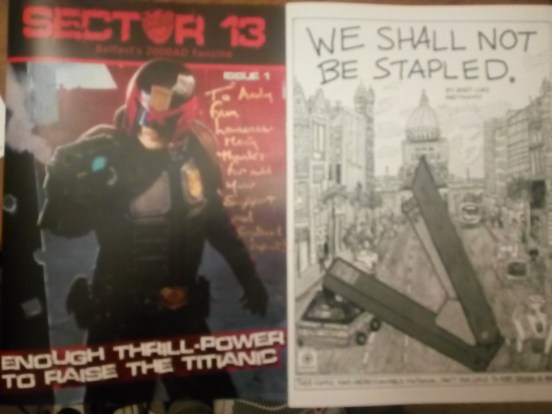
More information at http://patreon.com/andyluke and the prologue is already there for subscribers with more new words tomorrow.


Calloused fingers from my new comic, stained with blue ink after a reasonably good launch; thankfully it didn’t stain the customer’s copy. Then the Enniskillen Comics Fest, were I got a good chat with Colin Mathieson among others. It was nice to see Alan & Sue Grant again, they give me a warm feeling. It was old skool fest life: abandoning the table, talking with everyone, getting excited about stuff! I hosted ‘Breaking into Comics’ with Colin, Jenika, Ciaran Marcantonio and Grainne McEntee, who makes Bubbles O’Seven: Simian Agent, which is really fun. I’m excited to be reading Ciaran’s comics soon. He’s properly excited about Neon Skies, and Red Sands looks great. I seem to be out of copies of We Shall Not Be Stapled, though it didn’t sell so well. Maybe a second printing. An e-version for sale in a month.